
Healthy Minds launches Oklahoma Integrated Care Resource Center to expand mental health services in primary care
Healthy Minds Policy Initiative is set to launch the Oklahoma Integrated Care Resource Center, a training and technical assistance hub that will equip primary care and specialty clinics across Oklahoma to screen for and treat patients’ mental health and substance use conditions.
In its first three years, the Center will support nine clinics with intensive training to implement the Collaborative Care Model, an evidence-based framework for integrating behavioral health into primary care settings. Initial clinic sites include family medicine, pediatrics, and obstetrics and gynecology practices.
Fifty other clinics will get training and support to expand access to care by treating patients’ behavioral and physical health concerns together.
Related: Understanding integrated behavioral health care and the Collaborative Care Model
The Center’s launch and initial efforts are made possible by a $5.57 million Legacy Grant from Oklahoma’s Tobacco Settlement Endowment Trust (TSET).
“TSET’s ability to award its historic Legacy Grants to improve health is a testament to the wisdom of early framers of the endowment trust and the Oklahoma voters who approved the state question in 2000,” said TSET Executive Director Julie Bisbee. “Funding Healthy Minds Policy Initiative’s new resource center to integrate behavioral health with physical health and disease prevention illustrates how TSET Legacy Grants support initiatives that can transform health in Oklahoma.”
Bringing behavioral health care into primary care settings recognizes how mental and physical health are intrinsically connected — and how conditions like depression and substance use put people at higher risk for physical health problems like cardiovascular disease and cancer.
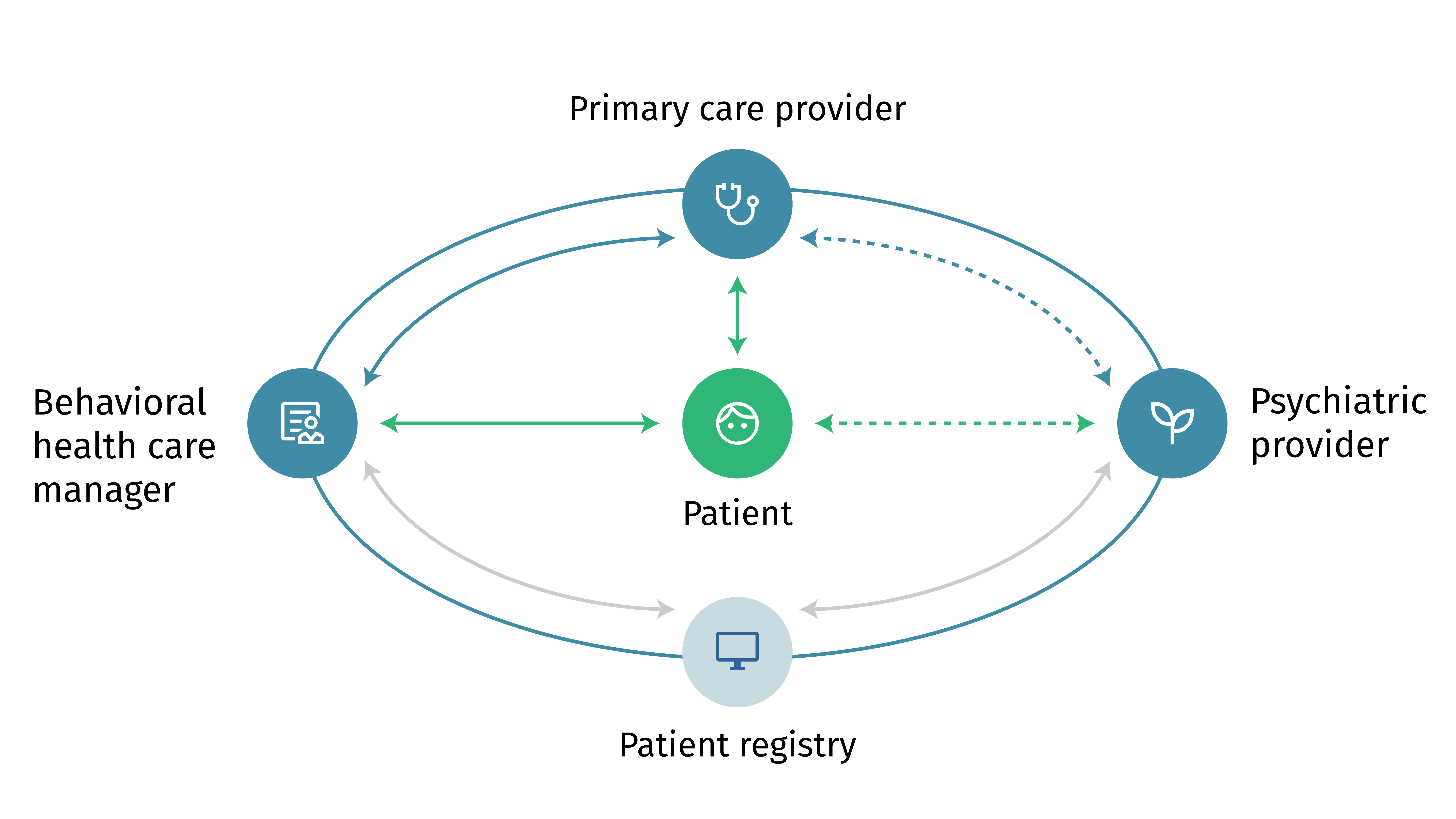
In the Collaborative Care Model, psychiatrists work as consultants to primary care providers. With guidance from the consulting psychiatrists, primary care providers see patients directly and address their behavioral health concerns in a familiar setting. This way, far more patients can access behavioral health treatment, and psychiatrists can reserve traditional face-to-face visits for patients with more severe or acute needs.
One study found that twice as many patients improved when receiving care for depression through the Collaborative Care Model versus typical care. Among patients with depression and cancer, patients treated using Collaborative Care saw more improvement, less pain and fatigue, and better quality of life.
Dr. Sara Coffey, chair of psychiatry and behavioral sciences at Oklahoma State University’s Center for Health Sciences, will serve as an advisor and chief behavioral health lead to the Center.
“Good mental health is vital for good overall health,” said Dr. Coffey. “So, the ability to meet patients where they are — often their primary care physician's office — is a huge step toward improving health for Oklahomans. With this collaborative model, we’re removing barriers so that primary care clinics are equipped to meet this need."
When primary care clinics use integrated care strategies, far more people are screened, detected, and treated for behavioral health conditions.
“Primary care can be a vital entry point for people who need help for mental health or substance use problems, but too often, Oklahomans aren’t getting appropriate care in these settings,” said Zack Stoycoff, Healthy Minds’ president and CEO. “Addressing behavioral health in primary care is one of the most important changes we can make to reverse Oklahoma’s trends of suicide and overdose deaths.”
Texas-based Meadows Mental Health Policy Institute and the National Council for Mental Wellbeing will support the Center’s work as nationally leading technical assistance providers for integrated care and the Collaborative Care Model.
The Oklahoma Integrated Care Resource Center is among 14 projects funded by TSET to increase access to quality health care access, develop the state’s health care workforce, foster research, and improve access to nutritious food across Oklahoma. In total, TSET awarded nearly $150 million in Legacy Grants, a new grant program to mark the agency’s 25-year anniversary.
The Center’s website and resource hub will launch this summer. Sign up for updates here to learn more when it goes live.

